Beauty and wellness: the link between feminine rituals, nature, and self-care
"Beauty" is a word that contemporary culture has redefined many times. For decades we have associated it with an aesthetic canon: wrinkles to erase, pores to hide, imperfections to fight. In recent years, something has changed. Today, beauty is discussed together with
"Beauty" is a word that contemporary culture has redefined many times. For decades, we associated it with an aesthetic canon: wrinkles to erase, pores to hide, imperfections to combat. In recent years, something has changed. Today, beauty is discussed alongside wellness: it's no longer just about how we look, but how we feel in our own skin.
This paradigm shift brings with it a powerful idea: skincare is not (just) cosmetics; it is a self-care ritual. A few minutes dedicated to oneself twice a day become an anchor for well-being, a moment of pause in a day that often demands we rush. In this guide, we explore the deep connection between beauty, rituals, nature, and self-care — and why Mo'Stò's seven pillars are precisely an expression of this philosophy.
What Beauty Rituals Truly Are
A ritual is more than a routine. A routine is a sequence of actions, often automatic, aimed at achieving a result. A ritual is a sequence of actions experienced with awareness, where the how is as important as the what. A ritual has three characteristics:
- Intentionality: you do it with a clear intention (self-care, presence, pause);
- Repetition: it takes place at the same time, with the same sequence, creating familiarity;
- Meaning: it is invested with symbolic value — it's not just "applying a cream" but "taking care of oneself."
Transforming skincare into a ritual means slowing down. Feeling the product's scent. Noticing the texture on the skin. Observing the transformation (the skin hydrating, the lips softening). That's when the cosmetic act becomes a wellness experience.
The Scientific Benefits of Rituals
Psychologists who study behavior have shown that daily rituals offer concrete benefits:
Anxiety Reduction
A consistent ritual creates predictability. In an uncertain world, small, regular actions are anchors of stability — they reduce cortisol levels and increase the sense of control.
Behavioral Consistency
When an action becomes a ritual, it's much easier to maintain it over time. This is the principle of James Clear's atomic habits: small, repeated actions lead to big changes because they are self-reinforcing.
Mind-Body Connection
Focusing on physical sensations (a scent, a texture, a hand gesture on the skin) activates mindfulness: the here-and-now that is often missing from our days.
Increased Positive Self-Perception
Dedicating time to your body sends a clear message: "I deserve attention." It's a small act of self-love that reflects on self-esteem.
Did you know? Studies from Harvard Business School have shown that people who engage in rituals — even small, seemingly trivial ones — report higher levels of satisfaction and performance. A ritual is not a waste of time: it's an investment of time.
The Role of Nature in Modern Skincare
Over the past twenty years, cosmetics has returned to viewing nature not as an alternative to "chemicals," but as a source of effective and culturally significant ingredients. Thermal waters, vegetable oils, plant extracts, food derivatives: nature is an inexhaustible laboratory of bioactive molecules.
Why Natural Ingredients Are Gaining Ground
- Documented Efficacy: a growing number of clinical studies confirm the activity of plant extracts (resveratrol, polyphenols, essential fatty acids);
- Tolerability: often well-tolerated even by sensitive skin, with a lower risk of reactions;
- Cultural History: ingredients like grape seed oil, olive oil, and honey have a millennia-old tradition of cosmetic use;
- Sustainability: often recoverable from agri-food supply chains, reducing environmental impact.
Ingredients like grape seed oil and Montepulciano d'Abruzzo extract represent a perfect example of the balance between nature and science. To explore this aspect further, read From the Vineyard to the Lips: Wine in Modern Cosmetics.
Self-Care: Much More Than a Trend
The term self-care entered contemporary vocabulary especially during and after the pandemic. For many, it became synonymous with "scented candles and face masks," but its original meaning is deeper. Self-care is the set of daily actions by which we take responsibility for our well-being — physical, emotional, and mental.
It includes:
- Eating well and sleeping enough;
- Regular physical activity;
- Healthy boundaries in relationships and work;
- Moments of silence and reflection;
- Body care — including skincare, lip care, intimate care.
The Three Dimensions of Cosmetic Care as Self-Care
Skincare can be self-care on three levels:
- Facial Skincare — the care of the skin that others see first. For the complete routine, read the facial skincare guide;
- Lip Care — the care of a delicate and sensitive area, symbolic for speech and kissing. Delve deeper with the lip care guide;
- Intimate Care — the most private care, often the most neglected. Explore Intimate Care and Female Well-being.
All three, experienced with awareness, are manifestations of the same principle: I deserve attention.

The 7 Mo'Stò Pillars: A Vision of Beauty-Wellness
The Mo'Stò philosophy is articulated in seven pillars that translate the connection between beauty, wellness, and sustainability into practice.
1. Territoriality
Ingredients that speak of the territory (Montepulciano d'Abruzzo extract, Abruzzo grape seed oil). The skin you care for becomes connected to a specific place, not an anonymous laboratory.
2. Circular Economy
Recovering winemaking waste and transforming it into cosmetics means generating value without generating waste. To learn more, read Sustainable Cosmetics.
3. Sustainability
Low-impact materials, eco-designed packaging, short supply chain. Beauty that doesn't cost the planet.
4. Innovation
Original formulas, recognizable packaging, product names that tell stories. Mo'Stò doesn't want to be just another skincare brand but a new proposition.
5. Awareness
Informed skincare, prevention, conscious ingredient choices. Knowing what you put on your skin is the first act of self-care.
6. Inclusion
Beauty for all bodies, all ages, all stories. The Mo'Stò message aims to be universal, never exclusive.
7. Passion
The energy that drives everything: from ingredient selection to brand storytelling. Without passion, the rest doesn't exist.
How to Transform Skincare into a Ritual
A few small adjustments can transform your routine into a true self-care ritual.
Create an Environment
A candle, chosen music, soft lighting. The setting makes the difference between "applying products" and "taking care of oneself."
Slow Down Your Actions
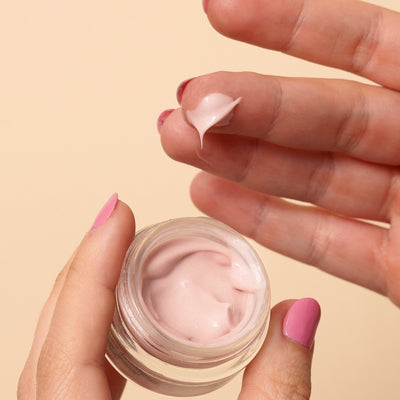
Massage the serum instead of "applying" it. Feel the texture of the cream as it spreads. Touch your lips with the balm instead of applying it distractedly.
Engage Multiple Senses
Scent, texture, sight (observe the skin transforming), touch. The olfactory dimension is particularly powerful for anchoring the ritual in memory.
Stay Present
No phone during the routine. No mental to-do lists for the next day. Just you, your face, your actions.
Be Grateful
Conclude with a small positive thought: "I am taking care of myself." This is not rhetoric: it's a self-affirmation that, over time, changes how you perceive yourself.
The Connection to the Territory and Nature
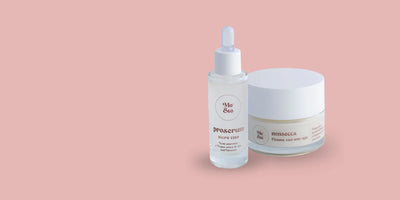
One of the most beautiful things about the Mo'Stò model is that each product is rooted in a specific place. When you apply Proserum, you are putting something on your skin that comes from the grapes of Abruzzo vineyards. It's a small way to reconnect with nature, with a territory, with a history — even while in the city, even while far from Abruzzo.
To explore this territorial dimension further, read Abruzzo and Beauty: The Natural Secrets of an Authentic Land.
Beauty That Lasts Over Time
The most lasting beauty is not the one seen in photos. It's the one that arises from an inner balance: sleeping well, eating consciously, moving, laughing, taking care of oneself. Skincare is just one piece of the puzzle — but an important one, because it's the daily act by which you care for the skin you inhabit, not the skin others see.
This is precisely the difference between cosmetics and care. Cosmetics correct; care embraces. Mo'Stò stands on the side of care.
Frequently Asked Questions
How long does it take for a skincare ritual to become a habit?
Studies on habit formation suggest 21-66 days, with an average of about 40. The key is to perform the action always at the same time and in the same place: before morning coffee, after brushing your teeth at night. The more predictable the sequence, the faster it becomes automatic.
Can I practice self-care even with little time?
Absolutely yes. Self-care is not about quantity but quality. Five minutes of mindful skincare are worth more than thirty distracted minutes. The ritual can be brief, as long as it is conscious.
What to do when I lose motivation?
Return to your "why." You don't do skincare to be beautiful according to external standards — you do it because you deserve attention. If motivation wanes, reduce your routine to the essentials (cleanser + moisturizer + SPF) but don't skip it. Consistency, even minimal, is more powerful than sporadic efforts.
Are natural products always better?
Not automatically. "Natural" is not synonymous with "effective" or "tolerated." What matters is the complete formulation, the efficacy of the active ingredients, and tolerability. The best products intelligently combine nature and science.
How do I know if a product is right for me?
Study the INCI list, start with products with recognizable ingredients, and always do a patch test on a small area before extended use. If you have doubts, a consultation with a dermatologist or cosmetologist can help build a personalized routine.
Conclusion
Beauty and wellness are not separate concepts. They are two sides of the same way of existing in the world: present, conscious, self-aware. Skincare, experienced as a ritual, is one of the simplest and most powerful ways to cultivate this presence every day.
Mo'Stò is born from this vision: products that don't promise miracles but offer small daily acts of care, rooted in a territory (Abruzzo), in an ingredient (wine), in a philosophy (slowing down). Continue to explore with Abruzzo and Beauty, the lip care guide, or sustainable cosmetics.