Face skincare: complete routine with serum and anti-aging cream (updated guide)
Good skincare isn't measured by the number of bottles on your bathroom shelf, but by the consistency with which a few carefully chosen products become part of your daily routine. In recent years, the pendulum of cosmetics has swung between opposite extremes: 12-step routines inspired by the core model
Good skincare isn't measured by the number of bottles on your bathroom shelf, but by the consistency with which a few well-chosen products become part of your daily routine. In recent years, the cosmetic pendulum has swung between opposite extremes: 12-step routines inspired by the Korean model on one hand, essential minimalism on the other. The truth—as is often the case—lies somewhere in the middle.
In this guide, we'll walk you through a truly effective facial skincare routine: the three fundamental steps, the differences between morning and evening, key ingredients (retinol, hyaluronic acid, niacinamide, ceramides), and the growing role of natural extracts like those derived from wine. A balanced approach, based on evidence and adaptable to all ages and skin types.
Why facial skincare is not a luxury, but a necessity
Facial skin is exposed daily to a cocktail of stressors: atmospheric pollution, UV rays, temperature fluctuations, fine particulate matter, blue light from screens. Without conscious cleansing, moisturizing, and protective actions, the skin reacts with dehydration, loss of elasticity, premature appearance of wrinkles, and hyperpigmentation.
But skincare is not just about preventing damage; it's also about active regeneration. Skin renews itself in cycles of approximately 28 days in young adults, up to 40-50 days after age 50. Helping this process with ingredients that stimulate cell turnover (retinoids, AHAs, BHAs) and nourish the barrier (ceramides, plant oils) means supporting the skin in its natural work.
The 3 fundamental steps of facial skincare
A complete routine consists of three essential steps, adjusted for morning and evening.
1. Cleansing: the basis of everything
Cleansing is the most underestimated and, at the same time, the most important step. Improperly cleansed skin does not absorb subsequent products and is prone to clogged pores, micro-inflammation, and particulate accumulation.
Morning: Gentle cleansing with a hydrophilic cleanser (milk, gel, soft foam) removes overnight sebum and product residues from the previous evening.
Evening: Double cleansing is the most effective practice. First, an oil-based makeup remover or balm (removes makeup, SPF, sebum, particulate matter), then a water-based cleanser (thoroughly cleanses). Dermatologists agree: it's the step that makes the biggest difference in long-term skin quality.
What to avoid: highly foaming cleansers with SLES/SLS, which alter the skin's pH (ideal 5.5) and dehydrate. Your skin should not feel "tight" after cleansing; if it does, the product is too aggressive.
2. Facial serum: targeted treatment
The serum is the most concentrated product in the routine. While cream acts on the surface, serum—formulated with smaller molecules—penetrates deeper layers of the epidermis, where active ingredients can exert their action.
For anti-aging skincare in particular, ingredients like active wine water, naturally rich in antioxidants, used in synergy with hyaluronic acid and smoothing extracts, provide luminous, nourished, and relaxed skin.
Here's a well-documented in-depth look: Fanpage guide to anti-aging active ingredients

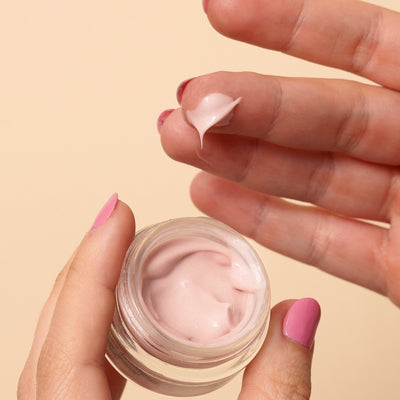
3. Face cream: hydration and protection
The face cream "seals" the serum and creates a protective barrier. It is chosen based on skin type (richer for dry skin, lighter for combination-oily skin) and season.
A good anti-aging cream should combine:
- Hydrators
- Emollients
- Natural occlusives
- Antioxidants
- Anti-aging actives
Nonsecca is an anti-aging cream with an enveloping texture that smooths features and provides elasticity and comfort with nourishing and antioxidant action. The combination of multi-level hyaluronic acid and firming actives gives an immediate plumping effect: smoother, more elastic, and even-toned skin.

Morning and Evening Routine
- Gentle cleansing with a light cleanser;
- Antioxidant serum: for anti-free radical shield;
- Moisturizing cream: hydration + barrier protection;
- Eye cream (if needed);
Key Anti-Aging Actives
Hyaluronic Acid
A polysaccharide naturally present in the skin. It retains up to 1000 times its weight in water. Hydrates on the surface (high molecular weight) and in depth (low molecular weight). Suitable for all skin types, all ages.
Polyphenols and Resveratrol (plant extracts)
Plant antioxidants with documented anti-aging action. Resveratrol, in particular, activates sirtuins—proteins involved in cellular longevity. Extracted from grapes (Montepulciano d'Abruzzo in Mo'Stò's case) or other plant sources.
Skinimalism: Fewer Products, More Quality
The "skinimalism" trend—emerged in 2021 and consolidated by 2025—proposes an essential skincare routine: a few carefully chosen products that do their job without overwhelming the skin (in-depth analysis by My Personal Trainer).
The principles:
- Effective ingredients, not endlessly long INCI lists;
- Cleanser + moisturizer + SPF in the morning, cleanser + treatment + cream in the evening. That's it;
- Listen to your skin: if it reacts, pause and simplify;
- Consistency: a simple routine done every day is better than an elaborate one done three times a week.
The value of natural extracts: the case of grapes
Among the most studied natural extracts for modern skincare, those derived from grapes and wine are gaining a central role. Resveratrol (present in grape skins) and grape seed oil (extracted from the seeds after winemaking) offer a cocktail of antioxidants, polyphenols, vitamins E, and essential fatty acids.
In vitro and in vivo studies have shown that resveratrol can activate sirtuins, a class of proteins involved in cellular longevity. Grape seed oil, rich in linoleic acid (omega-6), is ideal for rebuilding the skin's lipid barrier (in-depth analysis NSS G-Club).
Mo'Stò has built its anti-aging proposal around this ingredient—recovered from Abruzzese winemaking waste—a vision that combines efficacy and sustainability. To explore the origin of this idea, read From the vineyard to the lips: wine in modern cosmetics and Sustainable cosmetics: from grape waste to skincare.

Skincare and well-being: the deep connection
A well-executed skincare routine is also a daily self-care ritual. It's not just about applying products; it's about dedicating 5-10 minutes twice a day to yourself, in silence, with awareness. It's a small gesture that, repeated over time, becomes an anchor for personal well-being.
This is precisely the philosophy that runs through all Mo'Stò proposals: skincare as ritual, ingredient as story, product as moment. To explore this approach further, read Beauty and well-being: the link between rituals, nature, and self-care and Abruzzo and beauty: the natural secrets of an authentic land.
Frequently Asked Questions About Facial Skincare
At what age should I start anti-aging?
Daily sun protection is anti-aging from the start. Hydration and antioxidants from age 20. Retinol at low percentages can be introduced from 25-30 as a preventive measure. Peptides and richer formulas from 35-40.
Is SPF really indispensable even in winter?
Yes. UVA rays—responsible for photoaging—pass through clouds and windows, and are present consistently throughout the year. Most "sun-induced" signs of aging come from daily UVA exposure, not just summer sun.
Do I need to change my routine with the seasons?
Don't completely overhaul it, but adapt. In summer, prefer lighter textures and fresh formulas. In winter, increase nourishment and barrier protection. Antioxidant serum and SPF remain constant all year round.
Conclusion: Conscious Skincare
Effective skincare is not a collection of products, but a conscious choice of ingredients, consistency, and attention. Three steps, two routines (day and night), a few well-chosen active ingredients: this is the formula that works for most of us.
Mo'Stò interprets this philosophy with an anti-aging proposal rooted in the Abruzzo region: Montepulciano extract and grape seed oil transformed into serum and cream, winemaking waste turned into a beauty ritual. Skincare that is not just cosmetics—it's a small manifesto of daily awareness.